Turn Any Recipe Into a Grocery List (Without Writing It Twice)
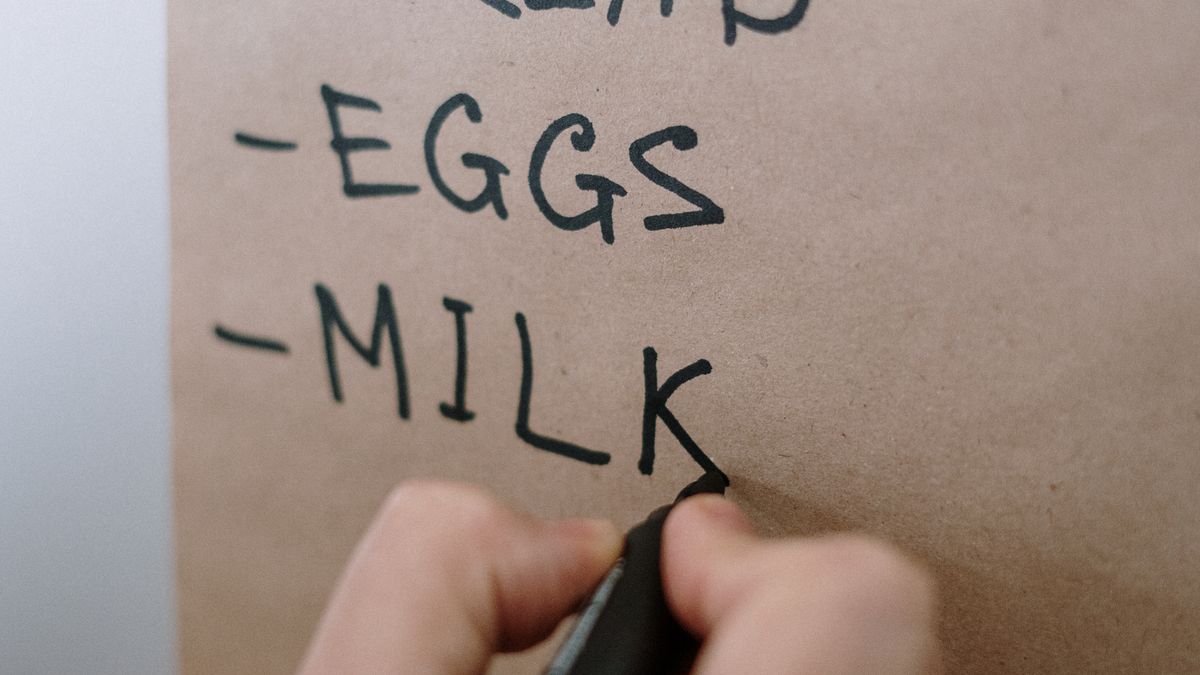
You've picked five dinners. Now comes the annoying bit: opening five recipes, reading down five ingredient lists, and copying them into your notes app while trying to remember whether you already wrote down onions. Three of those recipes want onions. Two want double cream. One wants 40g of parmesan and you will buy a 200g block for the fourth time this month.
The copying is where lists go wrong
A shopping list built by hand fails in a few reliable ways, and none of them are about being disorganised.
Recipes hide ingredients in the method. The ingredient list says nothing about oil, but step one says "heat a splash of olive oil", and you find out you're out of it with a cold pan in front of you. Recipes also assume a stocked cupboard. Salt, stock cubes, flour, and soy sauce rarely make the list, right up until the week you've run out of one.
Then there's duplication. Five recipes wanting onions produce five separate "onions" lines, or worse, one line and no idea whether it meant one onion or six. And the list comes out in recipe order, which is nobody's supermarket. You walk to the far end for coriander, back for milk, and back again for the parmesan you skipped, which is how a fifteen-minute shop becomes forty.
The list isn't the problem. Transcribing it by hand is. Remove the copying step and most of the failures go with it.
Save the recipe as data, not as a screenshot
Everything below depends on one thing: your recipes need to be stored with their ingredients as separate, structured items rather than as a wall of text. A screenshot of a recipe can't be added up. A photo of a cookbook page can't be merged with anything. A recipe whose ingredients are stored as "onion, 2, medium" can be.
That's why an AI recipe assistant starts by pulling recipes apart. You can paste a link to a recipe page or a cooking video and it extracts the ingredients and the method into a saved recipe. You can describe a dish you've been making for years and never written down, and it writes it down. Once it's in the vault in that form, it can feed a plan and a list without anyone typing it again.
Build the list from the plan, not from the recipes
Here's the routine end to end. It takes about five minutes.
1. Pick the week's meals
Drop the recipes you want onto the days you want them. If you're starting from a blank week, say what you fancy in plain English ("three quick weeknight dinners, one thing I can batch cook on Sunday, nothing with mushrooms") and let it suggest. This is the same routine covered in planning a week of dinners with AI.
2. Generate the list from the plan
One action, and every ingredient across every planned meal becomes a single list. The three onions are one line reading "onions, 6". The parmesan from two recipes is added up before you get to the shop rather than after. Nothing gets copied, so nothing gets skipped.
3. Subtract what you already own
Tell it once what you always keep in: olive oil, salt, plain flour, stock, tinned tomatoes, whatever your kitchen actually runs on. Those pantry staples get filtered out of every future list automatically, so you stop buying your ninth bottle of soy sauce. This is also the step that catches the hidden ingredients, because if olive oil isn't on your staples list, it stays on the shopping list where you can see it.
4. Shop it in aisle order
The list comes out grouped by supermarket section rather than by recipe. Produce together, dairy together, tins together. You walk the shop in one direction, and the whole thing takes noticeably less time than a list that sends you back and forth. It's a small change that you'll feel every single week.
Scaling up and down
Most recipes are written for four people, which is fine if you're four people. Adjust the servings and the quantities scale with them, so cooking for two doesn't mean doing arithmetic on 375g of pasta in the middle of the shop. Cooking for eight because family are visiting works the same way in the other direction.
Swapping a meal mid-week works too. Change Thursday from the curry to something faster and the list updates, so the coriander you no longer need drops off it.
What you actually get back
Two things, and the second one is the real prize. You get maybe fifteen minutes a week that used to go on transcription. Fine, but not life-changing on its own.
The bigger one is that you stop doing the second trip. The one where you get home, start cooking, and discover the recipe wanted double cream and your list said cream, so now someone's putting shoes back on at half six. That trip costs half an hour and considerably more goodwill than the fifteen minutes of typing ever did.
Don't write your shopping list. Store your recipes properly, plan the week from them, and generate the list in one action: duplicates merged, staples subtracted, aisles in order. The list stops being something you make and becomes something that falls out of a decision you'd already made.
Frequently asked questions
How do I turn a recipe into a shopping list automatically?
Save the recipe into an app that stores its ingredients as structured items rather than a block of text, then add it to a meal plan and generate the list from the plan. Because quantities are stored per ingredient, the same ingredient across several recipes gets added up into one line.
Can AI make a grocery list from a meal plan?
Yes. Pick the week's meals and the list is generated from their ingredients, with duplicates merged and quantities totalled. In oFaxy the list is also grouped by supermarket section, so you walk the shop once.
Why do my shopping lists always miss something?
Usually because the list was copied by hand from several recipes. Recipes hide small ingredients in the method, they assume you have oil and salt and stock, and copying five of them means five chances to skip a line. Generating the list removes the copying step.
Can I import a recipe from a website or a video?
Yes. Paste a link to a recipe page or a cooking video and the recipe assistant pulls out the ingredients and method into a saved recipe, ready for a meal plan and a grocery list.
Plan the meals. Let the list write itself.
Recipes in, aisle-ordered grocery list out, staples already subtracted. Free to start.